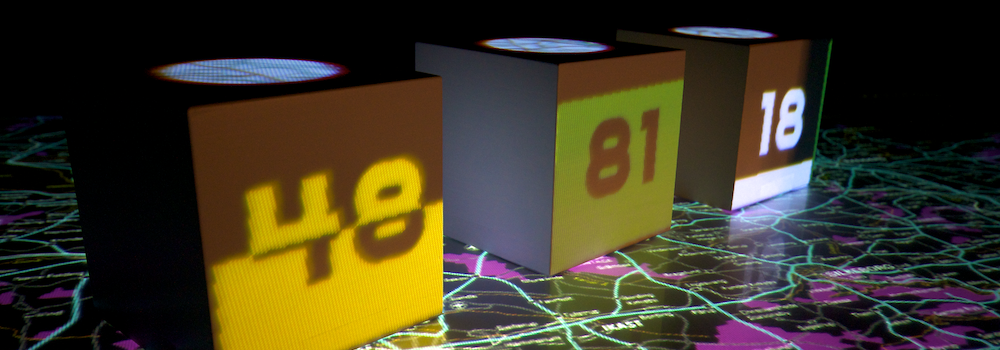
The Projection Mapping Teaching Platform project aims to develop a platform for teaching the combination of projection mapping and interactive tabletops.
The core idea of the project is to reduce the steepness of the learning curve by adapting one of the platforms that CAVI has developed over several years, so that some of the technical complexity is 'encapsulated' while providing technical interfaces that students can access, enabling them to build their applications on top. The objectives are therefore:
In the spring of 2025, the platform was tested as an integrated part of the course 3D Interaction within the Information Science and Digital Design program. 32 students worked in groups over a four-week period to develop prototypes based on the platform. A large number of the students also chose to continue working with the platform in their final exam projects, where they developed extensive prototypes with a high degree of completion. The following are a few examples of exam projects based on the platform:
In this project, the students explore how the platform can be used to design a digital, interactive experience that fosters dialogue and engagement as the audience explores the program at Roskilde Festival.
In this game, the students have worked with the research question: How can game balancing mechanisms be used to create fair and engaging competitive gameplay for players in asymmetric roles involving VR and 3D projection tables?
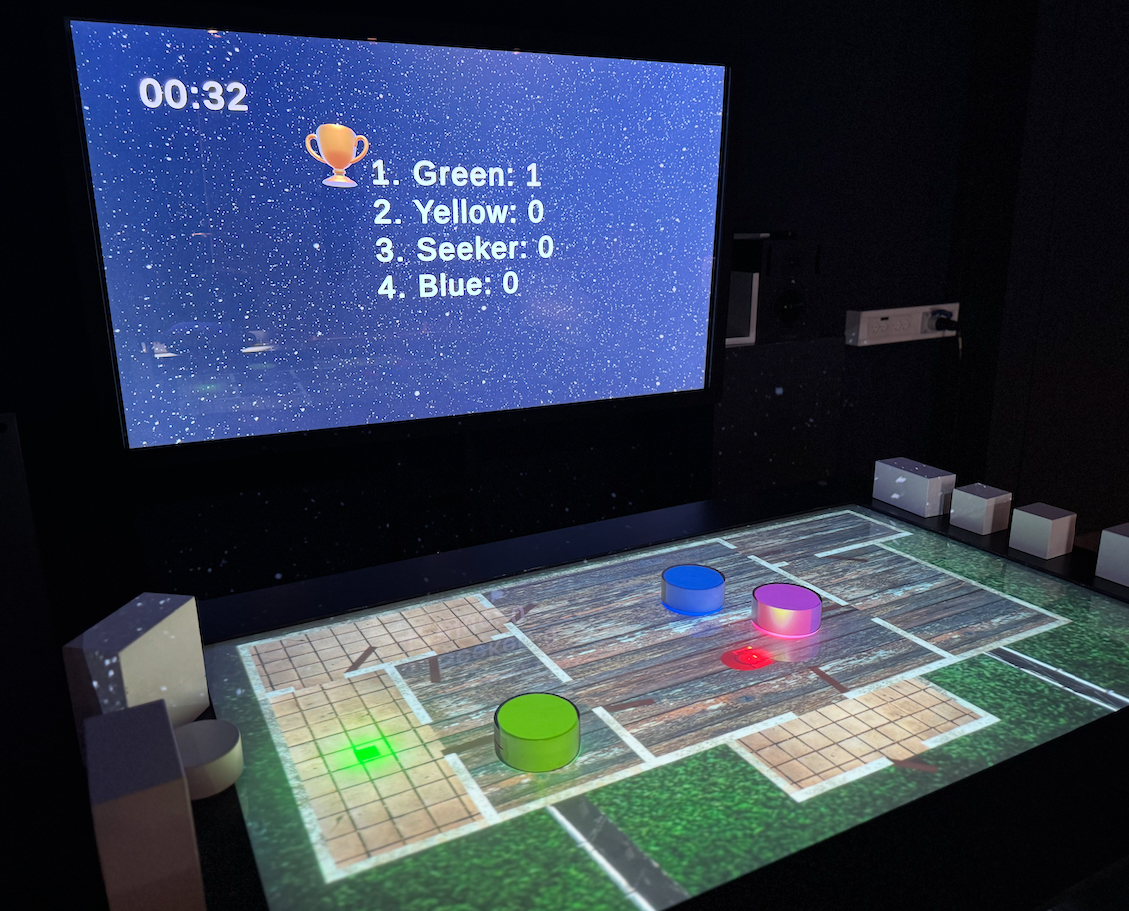
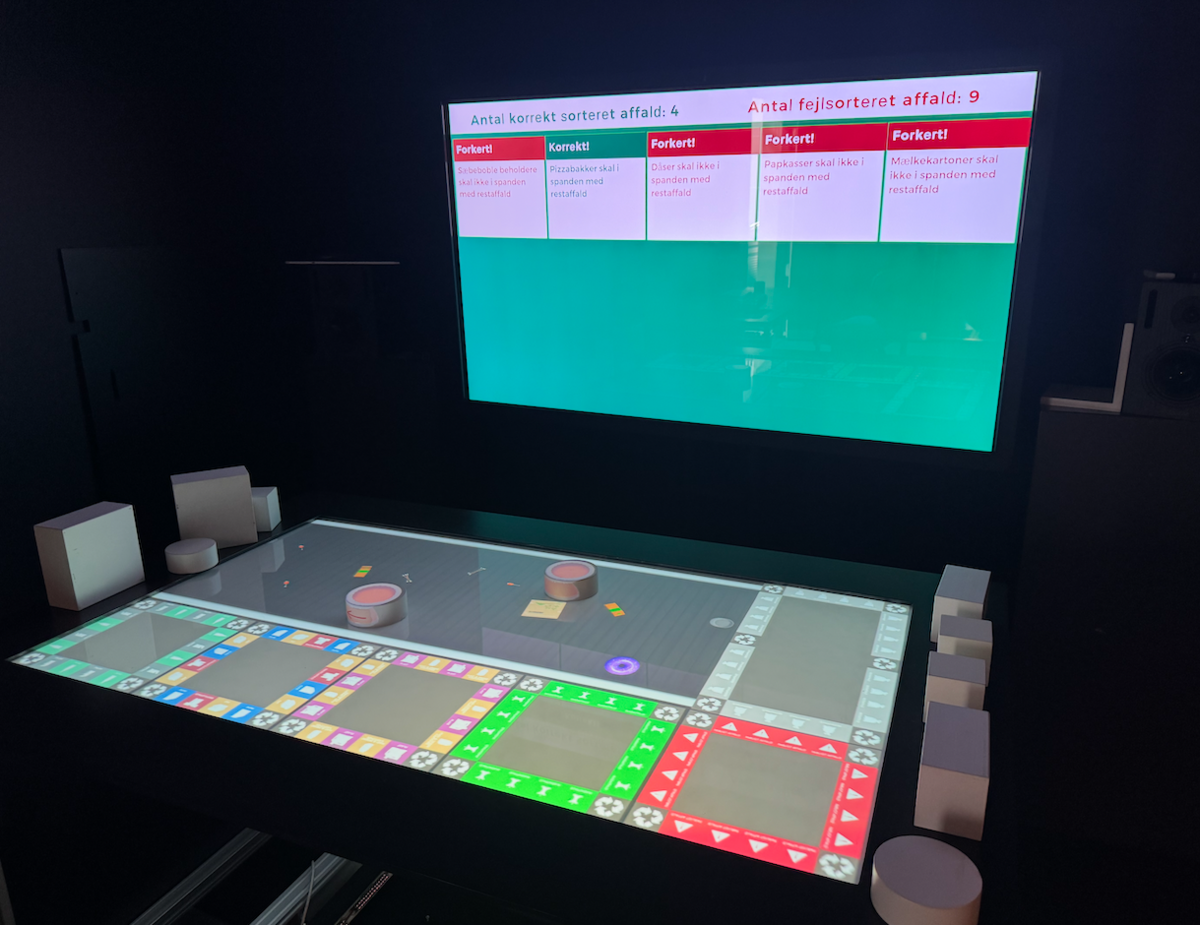
This project informs about proper waste sorting in Aarhus Municipality in the form of a multiplayer game.
In the spring of 2026, a revised version of the platform – featuring bug fixes and system modifications – was tested as an integrated module in the 3D Interaction course for Information Studies and Digital Design students. Working in groups over a four-week period, 31 students developed prototypes using the platform. A significant number of students chose to continue working with the platform for their final exam projects, producing highly refined and comprehensive prototypes. The following are a few examples of exam projects built on the platform:
This project investigates an interactive system designed to communicate the annual Kapsejlads event. Users can explore a digital map to access contextual information and music videos from each student association. Additionally, the system features a competitive multiuser mode where participants race against one another using custom, wireless kayak-paddle controllers.

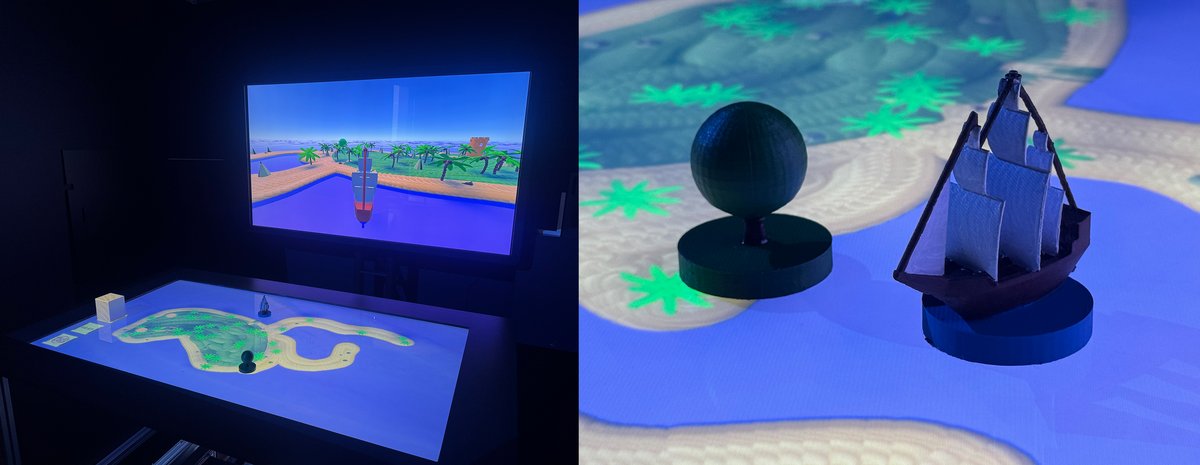
This prototype allows users to build custom islands using physical tangibles. By drawing grass and beach terrain, elements like palm trees, rocks, and huts spawn dynamically. A separate tangible controls a ship, giving users a third-person view to sail through and explore their environment.