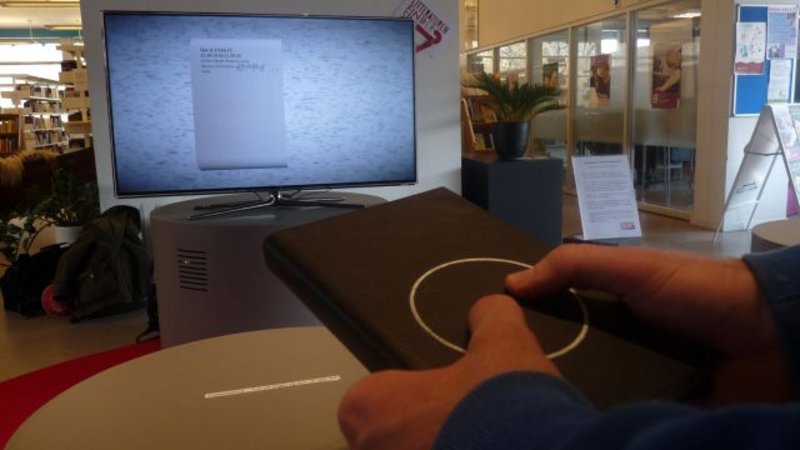
This installation originally consisted of a screen, a computer, a receipt printer, and three books. The software contained about 1,000 text fragments - building blocks for creating poems - organized into three groups, one for each book. By choosing different books, users could generate different texts.
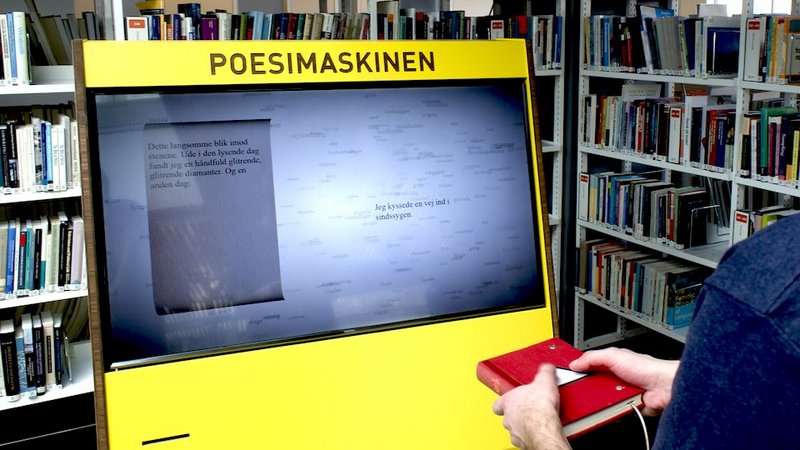
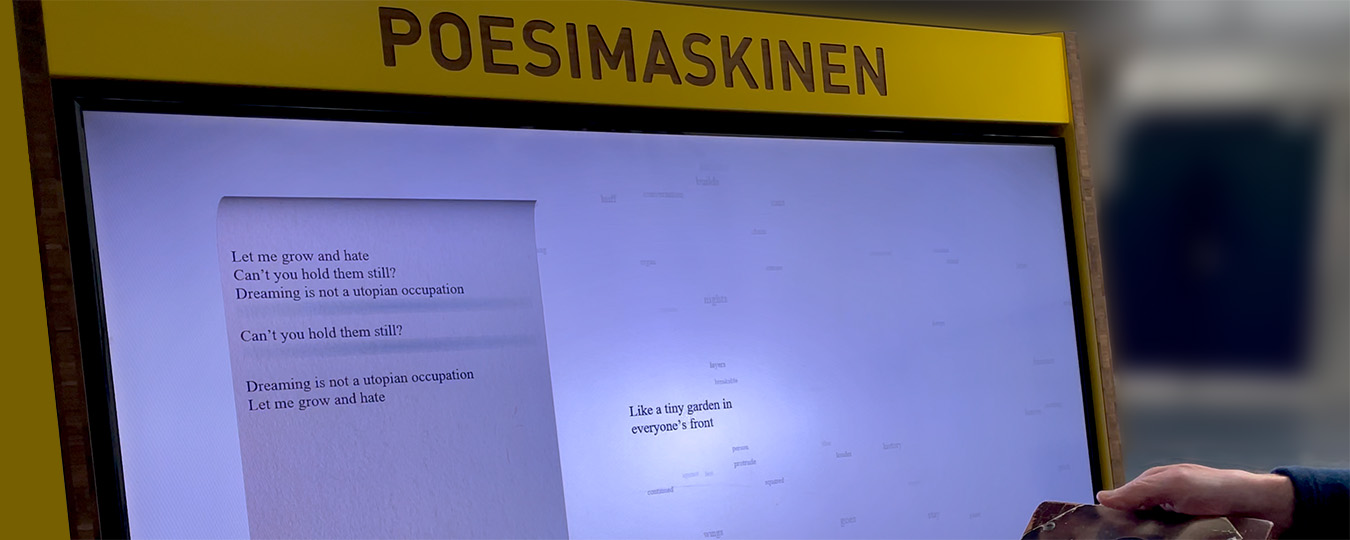
When the installation was idle, a cloud of words floated across the screen. Lifting a book triggered an empty text box - a scroll - to appear over the floating words. A line of text then appeared next to the scroll. Pressing the book changed the line; tilting the book could place the line on the scroll, preserving it as part of the poem. A new line would appear, and the process continued until the scroll was full and the poem complete.
Because the installation featured three books, several people could collaborate on creating a poem. Once finished, the poem was printed on the receipt printer as a tangible keepsake and also published on the blog inkafterprint.dk
The work aimed to highlight a defining trait of digital literature: its reliance on user interaction. The poem only came into existence through active participation - without it, the piece remained incomplete.
One of the earliest versions of INK (Tilfældigvis er skærmen blevet blæk, 2012) used phrases by Danish poet Peter-Clement Woetmann. Woetmann later curated 105 Variations (105 variationer, 2015), a collection of poems generated from his phrases and published on the blog. The book received highly positive reviews.
The latest version of INK, known as the Poetrymachine, is a yellow, furniture-like installation featuring a large screen, three books on low pedestals, and stools inviting users to sit and engage. New sets of phrases were added during an EU project (2016–2017) involving Danish poet Ursula Andkjær Olsen, as well as Romanian and Norwegian poets.
Five yellow Poetrymachines have toured Danish libraries and public venues for more than six years. In 2024, Poetrymachines have found permanent homes at CAVI and libraries in Thy, Frederikshavn, and Hjørring.